A Certificate of Analysis for this research compound is available on request. See our Lab Tests page for published batch certificates.
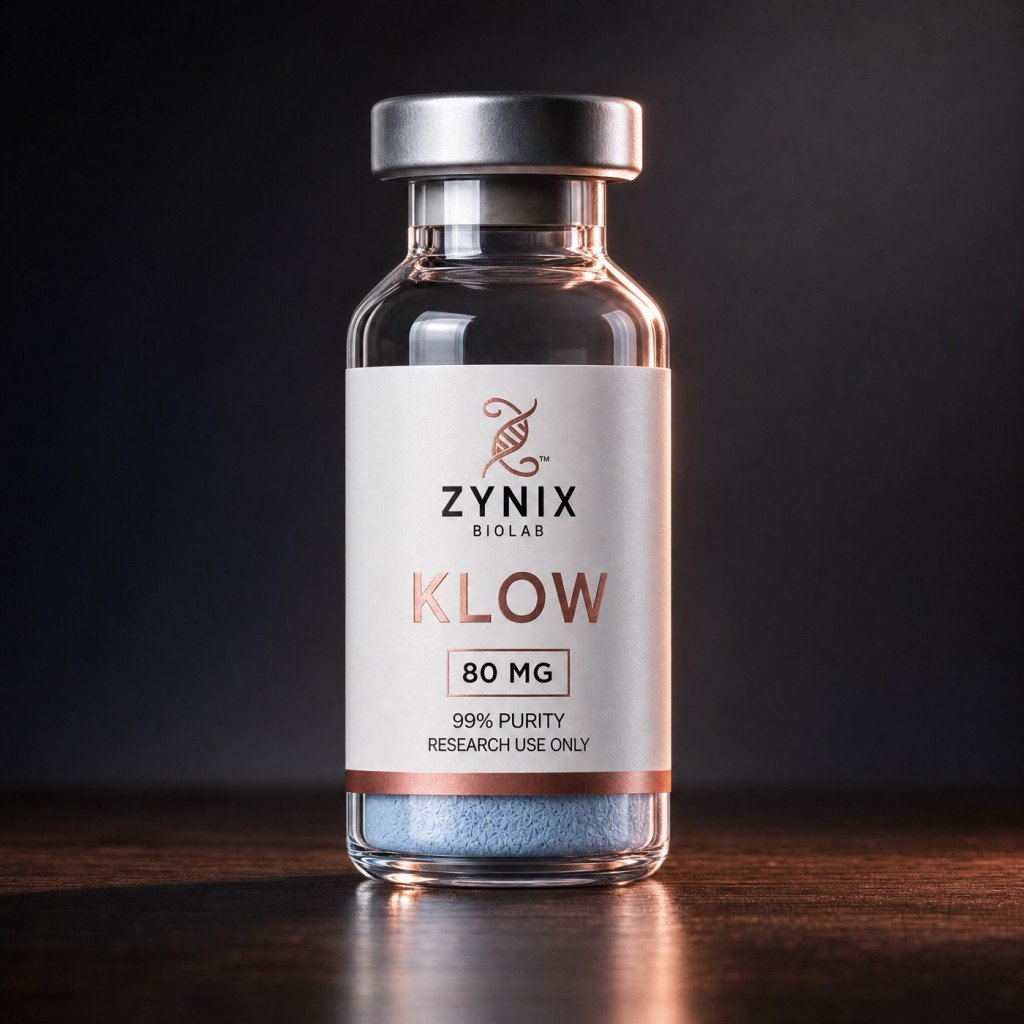
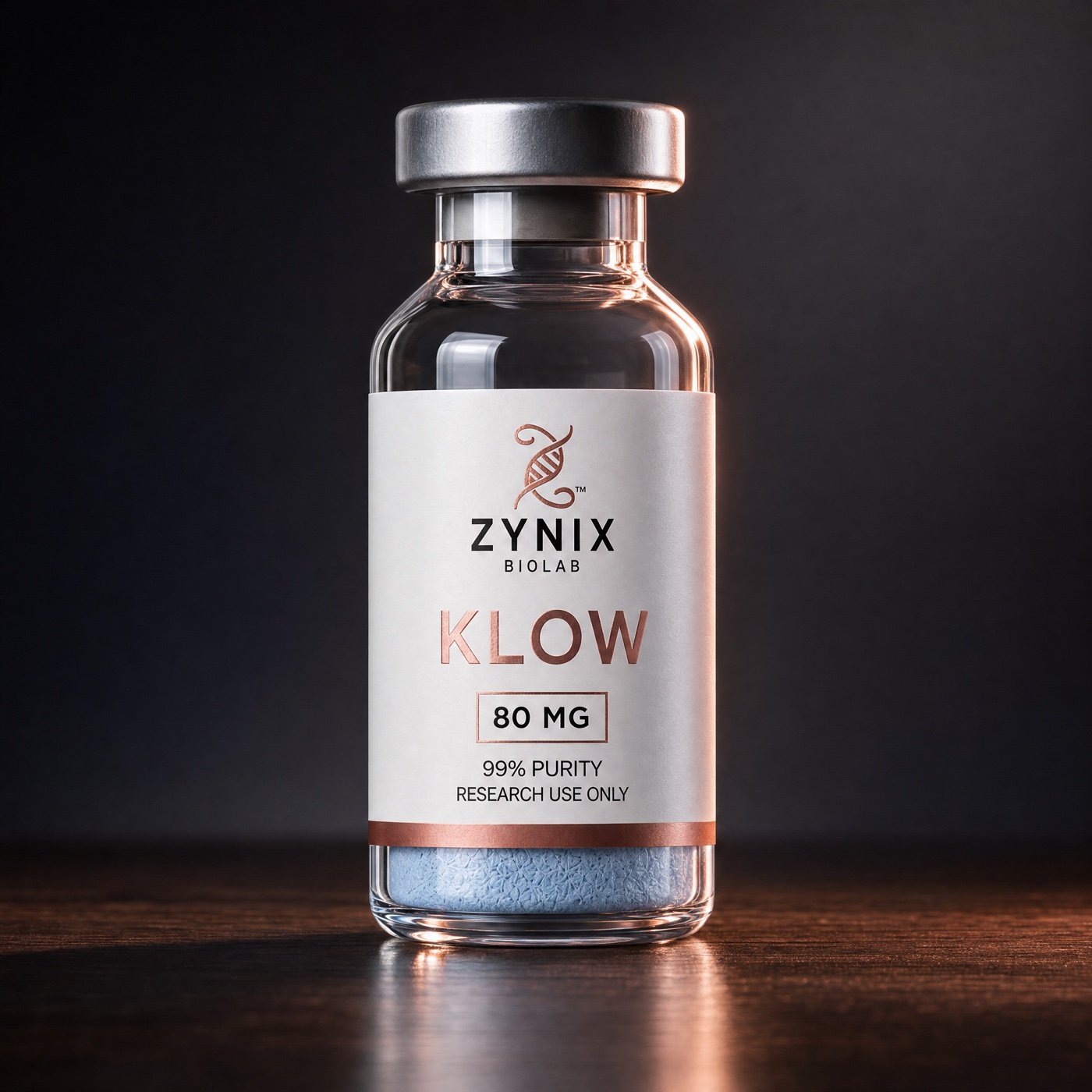
KLOW 80mg
$139.00
KLOW (blend), 80 mg. A research-grade proprietary peptide blend combining GHK-Cu, BPC-157, TB-500 and KPV, supplied lyophilized for laboratory research. Each constituent is HPLC-characterized for identity and purity, with lot-specific values reported on the accompanying Certificate of Analysis (COA). For research use only. Not for human use.
- ≥99% purity, HPLC-verified
- Identity confirmed by mass spectrometry
- Certificate of Analysis provided per lot
10 in stock
Be the first to review “KLOW 80mg” Cancel reply
Specifications
| Purity | ≥99% |
|---|---|
| Appearance | White lyophilized powder |
| Solubility | Soluble in bacteriostatic water; reconstitute for laboratory research |
| Storage | Store lyophilized at -20°C, protected from light |
| Shelf Life | 24 months from date of manufacture (lyophilized) |
Purity & Laboratory Testing
Each lot of KLOW is analyzed to confirm the identity and relative composition of its constituent peptides. Purity of the peptide components is assessed by high-performance liquid chromatography (HPLC), and identity is confirmed by mass spectrometry (MS) against the expected masses for GHK-Cu, BPC-157, TB-500 and KPV.
- HPLC purity: ≥99% for the peptide constituents (lot-specific values reported on the COA).
- Identity (MS): mass confirmation of each constituent peptide.
- Composition / ratio: as characterized on the lot COA.
- CAS numbers: as a proprietary multi-component blend, KLOW does not carry a single CAS registry number; constituent identifiers, where applicable, are reported on the COA.
A lot-specific Certificate of Analysis accompanies each unit. These analytical characterizations describe identity and purity of the supplied material only and do not constitute any representation of biological activity, safety, or efficacy. For research use only, not for human use.
Certificate of Analysis
A Certificate of Analysis is available per production lot, documenting HPLC purity and mass-spectrometry identity confirmation.
Research Background & Study Phase
For Research Use Only · Not for human or veterinary use · Not for diagnostic or therapeutic use.
References to clinical phases/studies describe the compound in independent third-party literature (e.g., ClinicalTrials.gov, PubMed) and do not represent claims, testing, or approval by Zynix Biolab.
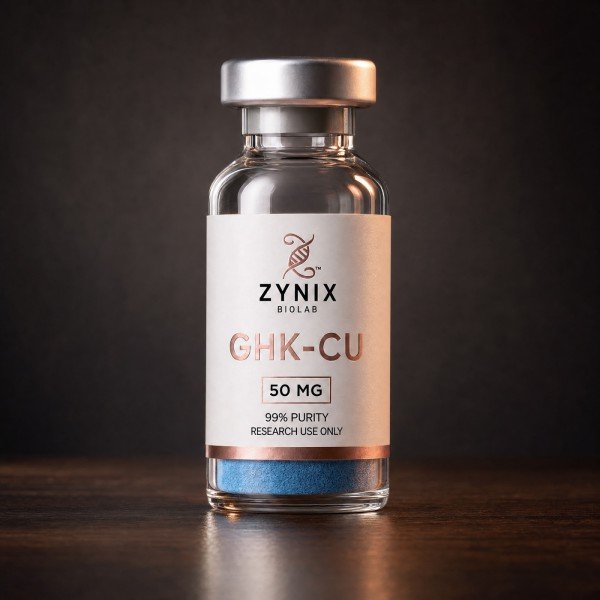
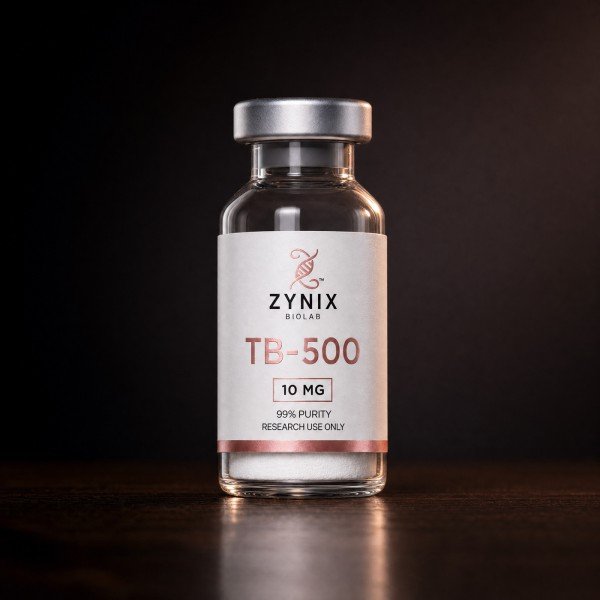
KLOW is a multi-component research blend assembled from four peptides that have each been independently described in the third-party scientific literature. The composition (as characterized on the lot COA) combines the copper-binding tripeptide GHK-Cu, the gastric pentadecapeptide BPC-157, the actin-binding peptide TB-500 (a synthetic fragment corresponding to a region of thymosin β4), and the KPV tripeptide (lysine–proline–valine, a C-terminal fragment of α-melanocyte-stimulating hormone).
- GHK-Cu — glycyl-L-histidyl-L-lysine complexed with copper(II); first isolated from human plasma and characterized in the literature as a matrix-remodeling and copper-transport peptide.
- BPC-157 — a synthetic pentadecapeptide derived from a sequence reported in gastric juice; examined preclinically in models of angiogenesis and connective-tissue repair.
- TB-500 — a synthetic peptide corresponding to an actin-binding region of thymosin β4; studied in vitro for G-actin sequestration and cell migration.
- KPV — a tripeptide fragment of α-MSH that has been the subject of in-vitro studies of NF-κB signaling and inflammatory pathways.
Regarding study phase: the individual constituents of this blend have been investigated primarily at the preclinical and in-vitro level in the published literature, and human clinical data remain limited. The proprietary blend itself is not the subject of registered clinical trials, and none of the four components is an FDA-approved drug. Any references to study phase describe third-party research catalogued in resources such as PubMed and ClinicalTrials.gov and do not represent testing, validation, or approval by Zynix Biolab. Supplied for research use only — not for human use.
Research Applications
For Research Use Only · Not for human or veterinary use · Not for diagnostic or therapeutic use.
In the published third-party literature, the constituent peptides of this blend have been examined in laboratory and in-vitro research contexts, including:
- Extracellular-matrix and collagen-remodeling pathways in cell-based systems (GHK-Cu).
- Angiogenesis and connective-tissue / fibroblast models in preclinical studies (BPC-157).
- Actin dynamics and cell-migration assays in vitro (TB-500 / thymosin β4 fragment).
- Inflammatory signaling pathways such as NF-κB modulation in cell models (KPV).
Within a research setting, blends of this type have been used to investigate how distinct signaling peptides behave in combination in controlled in-vitro systems. These descriptions are provided for scientific context only and reflect third-party research on the individual compounds; they are not claims about this product and not for human use, diagnostic use, or therapeutic use.
Handling, Storage & Reconstitution
General laboratory handling guidance for lyophilized research peptides:
- Storage (lyophilized): store at -20°C, protected from light and moisture; long-term storage at -20°C or colder.
- Reconstitution: for laboratory preparation, reconstitute with bacteriostatic or sterile water added slowly against the vial wall; swirl gently rather than shaking to preserve peptide integrity.
- After reconstitution: keep refrigerated (2–8°C) and aliquot to minimize freeze–thaw cycles.
- PPE: handle in a controlled laboratory environment using appropriate personal protective equipment (gloves, eye protection, lab coat) per institutional protocols.
This information describes laboratory handling of the material and is not a dosing or administration instruction. For research use only — not for human use.
Scientific References
For Research Use Only · Not for human or veterinary use · Not for diagnostic or therapeutic use.
- Pickart L, Margolina A. Regenerative and Protective Actions of the GHK-Cu Peptide in the Light of the New Gene Data. Int J Mol Sci. 2018;19(7):1987. PMID: 30042332. PubMed
- Chang CH, et al. The promoting effect of pentadecapeptide BPC 157 on tendon healing involves tendon outgrowth, cell survival, and cell migration. J Appl Physiol. 2011;110(3):774-780. PMID: 21030672. PubMed
- Van Troys M, et al. The actin binding site of thymosin beta 4 mapped by mutational analysis. EMBO J. 1996;15(2):201-210. PMID: 8617195. PubMed
- Brzoska T, et al. α-Melanocyte-stimulating hormone and related tripeptides: biochemistry, antiinflammatory and protective effects in vitro and in vivo. Endocr Rev. 2008;29(5):581-602. PMID: 18612139. PubMed
These references are provided for scientific context only and are not claims by Zynix Biolab.
These statements have not been evaluated by the FDA. This product is not intended to diagnose, treat, cure, or prevent any disease. Sold exclusively for laboratory research; not a drug, food, cosmetic, or dietary supplement.
Related products
Recovery & Tissue
Recovery & Tissue
Recovery & Tissue


Reviews
There are no reviews yet.